
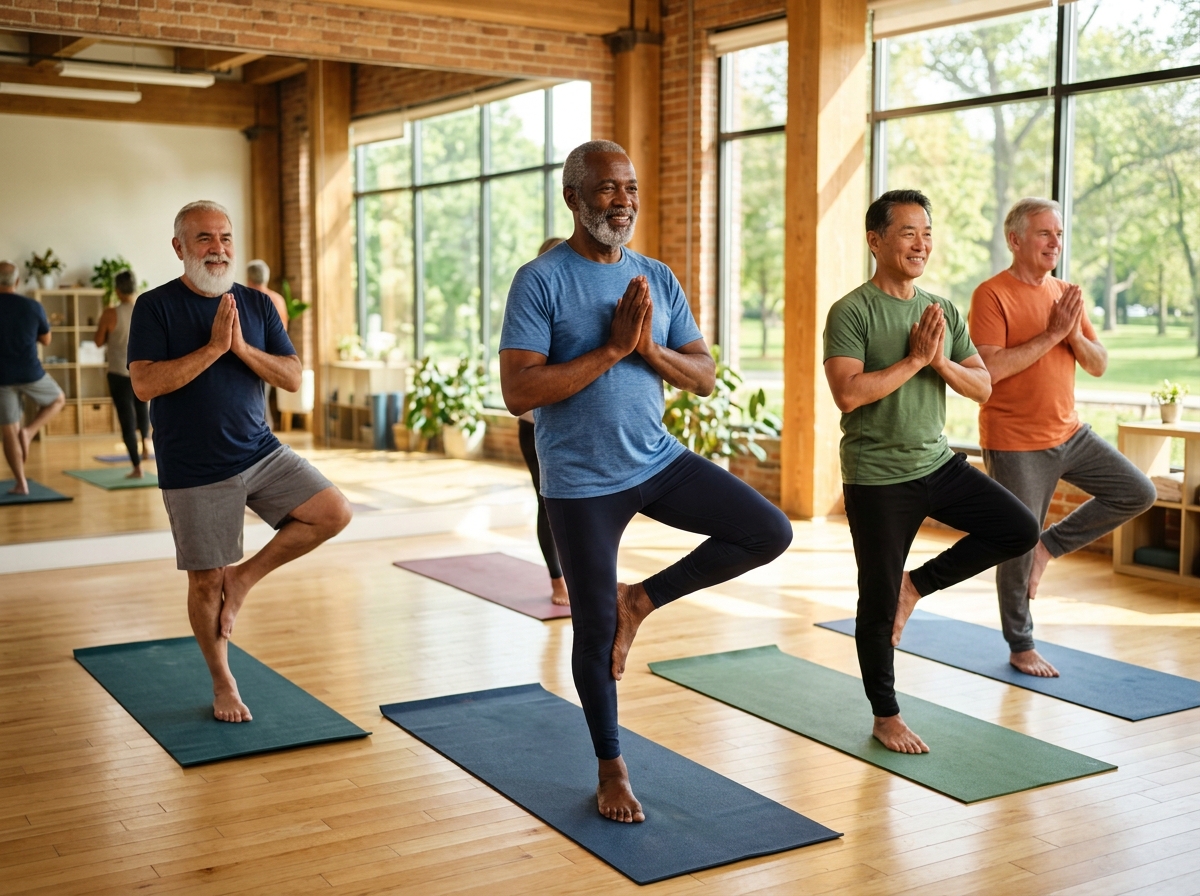
Mind and Body Alignment: The Clinical Power of Yoga
Yoga is more than a way to improve flexibility. Research from organizations such as the National Center for Complementary and Integrative Health (NCCIH) shows that yoga may support both physical and mental health. For older adults, especially those recovering from treatment or managing long-term health conditions, yoga can help improve strength, flexibility, balance, stress management, and overall well-being.
Yoga combines gentle movement, breathing, and focused attention. This makes it a flexible form of exercise that can be adjusted to fit different abilities and fitness levels.
The Science: Evidence-Based Wellness
The physiological shifts that occur during a yoga practice are profound and measurable. By consciously controlling the breath while holding physical postures, practitioners actively shift their autonomic nervous system out of "fight or flight" and into "rest and digest."
Visual Infographic: The Physiology of Yoga
(Cortisol Reduction, Vagal Tone, Proprioception, Fascial Release)
1 Stress Reduction and Cortisol Management
The NCCIH emphasizes that yoga is one of the most effective non-pharmacological tools for stress management. Chronic stress elevates cortisol levels, which degrades muscle tissue, suppresses the immune system, and exacerbates cancer recovery. Yoga practices significantly increase vagal tonethe activity of the vagus nervewhich immediately lowers heart rate, reduces blood pressure, and dramatically cuts circulating cortisol.
2 Restoring Deep, Restorative Sleep
Sleep disturbances are common among older adults and men undergoing medical treatments. Clinical trials have consistently shown that integrating a gentle yoga practiceparticularly in the eveningsignificantly improves both sleep latency (how fast you fall asleep) and sleep efficiency (how long you stay asleep). This is crucial, as deep sleep is the primary period when the body repairs cellular damage and regulates hormones.
3 Chronic Pain Symptom Management
The American College of Physicians strongly recommends yoga as a first-line treatment for chronic lower back pain. Yoga gently lengthens the deep fascial tissue and strengthens the microscopic stabilizer muscles surrounding the spine and pelvis. For men dealing with osteoarthritis, neuropathy, or generalized joint stiffness, customized yoga therapy provides profound, drug-free symptom relief and restores functional range of motion.
4 Balance and Fall Prevention
As we age, proprioceptionour body's ability to sense its location in spacenaturally declines, leading to an increased risk of falls. Yoga postures require immense focus on foot placement, weight distribution, and core engagement. This continuous spatial challenge rewires the brain's neuromuscular pathways, drastically improving static balance, coordination, and physical confidence.
Categorizing Yoga: Finding Your Practice
"Yoga" is a broad term encompassing dozens of different styles. For active aging and recovery, the NCCIH recommends focusing on styles that prioritize alignment, breath, and support rather than intense heat or speed.
chair_alt Chair Yoga
Highly accessible. Modifies traditional poses so they can be done while seated in a chair or using a chair for standing support. Perfect for individuals with severe mobility limitations or balance issues.
spa Restorative Yoga
Focuses entirely on downregulating the nervous system. Uses blankets, bolsters, and blocks to fully support the body in gentle postures held for 5 to 15 minutes, allowing deep fascial release.
accessibility_new Hatha Yoga
A foundational style that moves at a slow, deliberate pace. It focuses on holding basic postures for several breaths to build strength and perfect alignment before moving to the next.
medical_services Yoga Therapy
A clinical application of yoga practiced one-on-one with a certified Yoga Therapist. Specific postures and breathing exercises are prescribed to treat specific medical conditions, like sciatica or PTSD.
Safety Considerations for Older Adults
The NCCIH's "Yoga for Health" eBook emphasizes that while yoga is generally safe, older adults and individuals with specific health conditions must take precautions to prevent injury.
- warning Avoid Extreme Flexion/Extension: If you have osteoporosis or glaucoma, you must avoid extreme forward folds and inversions (where the head drops below the heart) to prevent spinal fractures or increased intraocular pressure.
- support Use Props Liberally: Yoga blocks, straps, and bolsters are not crutches; they are tools that bring the floor to you. Using them ensures your spine remains in healthy alignment, especially if your hamstrings or hips are tight.
- record_voice_over Communicate with Instructors: Always arrive early to inform your instructor about any surgeries, joint replacements, or active conditions (like neuropathy). A qualified instructor will provide immediate, safe modifications for you.
Watch: Introduction to Chair Yoga
Learn foundational breathing and spinal mobility exercises from a seated position.