
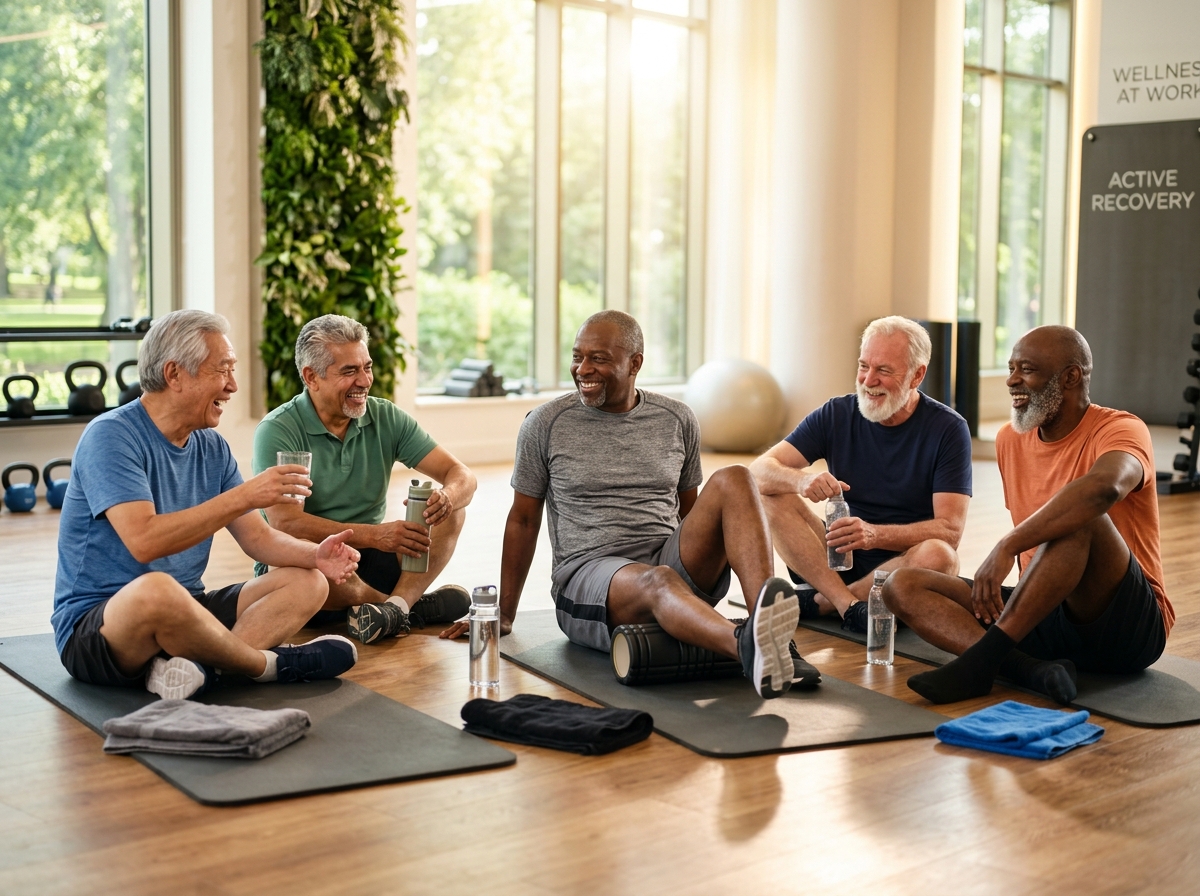
The Art of Recovery: Rest, Repair, and Resilience
There is a common misconception that getting fitter or healthier happens during the workout. In reality, exercise is the stimulus that breaks the body down. According to the American Academy of Orthopaedic Surgeons (AAOS) and the National Institute on Aging (NIA), the actual physiological growth, cardiovascular adaptation, and muscular strengthening occur entirely during the recovery phase.
For men navigating active recovery from prostate cancer treatments, managing chronic conditions, or simply aiming for healthy aging, understanding how to pace yourself and recover is just as critical as knowing how to exercise. A routine that ignores recovery inevitably leads to burnout, immune suppression, and severe overuse injuries.
The Science: Why the Body Demands Rest
Recovery is not the absence of work; it is an active, metabolic process. When you exercise, you create microscopic tears in your muscle fibers and deplete your body's glycogen (energy) stores.
Visual Infographic: The Recovery Timeline
(Glycogen Replenishment, Protein Synthesis, Lactic Acid Removal, CNS Reset)
1 Preventing Overuse Injuries via Cross-Training
The AAOS explicitly warns against repetitive-strain injuries (like tendonitis or stress fractures) caused by doing the exact same activity every day. They heavily advocate for cross-trainingvarying your activities (e.g., walking on Monday, swimming on Tuesday, strength training on Wednesday). This allows specific muscle groups and joints to rest and recover while you still maintain your cardiovascular fitness through a different modality.
2 Central Nervous System (CNS) Fatigue
It is not just your muscles that get tired; your central nervous system takes a massive hit during intense exercise. If you constantly push yourself without adequate rest days, your CNS cannot efficiently send electrical signals to your muscles. This leads to unexplained weakness, lethargy, irritability, and a plateau in your physical progress.
3 Active vs. Passive Recovery
Passive recovery is complete rest (sleeping, sitting). Active recovery involves very low-intensity movement (like a 15-minute leisurely stroll or gentle yoga) on your "off" days. Active recovery stimulates just enough blood flow to flush metabolic waste from the muscles and deliver nutrients without causing further muscle breakdown, often reducing soreness faster than complete rest.
Practical Guidelines: Getting and Staying Active
The National Institute on Aging (NIA) provides a comprehensive framework for older adults to build sustainable, long-term exercise habits that respect the body's need for pacing and recovery.
speed Pacing and The Cool-Down
Never stop an aerobic activity abruptly. The NIA advises a 5-to-10 minute cool-down period of slow walking. This allows your heart rate to return to normal safely and prevents blood from pooling in your legs, which can cause dizziness.
tune Adapting to Your Body
Your energy levels will fluctuate. If you are experiencing an arthritis flare-up or severe fatigue from medical treatments, adapt your plan. Swap a 30-minute brisk walk for 15 minutes of gentle, seated stretches.
flag Goal Setting
Set short-term, highly specific goals rather than vague ones. Instead of "I want to get in shape," set a goal like "I will walk for 15 minutes around the block every Monday and Thursday morning."
monitoring Monitoring Progress
The NIA recommends keeping a physical activity log. Tracking your consistency provides a massive psychological boost and helps you and your doctor understand how your body is responding to recovery.
Watch: The Art of Active Recovery
Learn how to use a foam roller and perform a proper cool-down sequence.