
Understanding Prostate Cancer:
Risk & Prevention
Prostate cancer is one of the most common cancers affecting men. Understanding what prostate cancer is, knowing the factors that may increase your risk, and learning what science says about prevention can help you make informed decisions about your health.

Evidence-Based
Clinical Data
Explore the evidence-based nutritional science that fuels cellular repair, lowers inflammation, and drives sustainable long-term recovery for men.
At TheBrightPath Foundation, we believe that knowledge is an important part of reducing prostate cancer disparities. Our goal is to provide evidence-informed information that helps individuals take meaningful steps toward healthier living through Move, Learn, and Live.
Important: The information on this page is for educational purposes and is not a substitute for medical advice, diagnosis, or treatment. Talk with a qualified healthcare professional about your personal risk and health decisions.
What Is the Prostate?
The prostate is a small gland that is part of the male reproductive system. It is located just below the bladder and in front of the rectum. The prostate surrounds part of the urethra, the tube that carries urine from the bladder out of the body. The prostate produces fluid that becomes part of semen.
As men age, the prostate may become larger. This condition is called benign prostatic hyperplasia (BPH). BPH is not prostate cancer, although an enlarged prostate can cause urinary problems and some symptoms associated with BPH or other prostate conditions may resemble symptoms of prostate cancer.
info Remember
An enlarged prostate does not automatically mean cancer. If you experience persistent changes in urination or other prostate-related symptoms, discuss them with a healthcare professional.
What Is Prostate Cancer?
Prostate cancer occurs when cancerous cells develop in the tissues of the prostate.
Prostate cancer is most common among older men. In the United States, approximately 1 in 8 men will be diagnosed with prostate cancer during their lifetime. Most men who are diagnosed with prostate cancer do not die from the disease.
Prostate cancer does not affect all men equally. Differences in risk, access to healthcare, early detection, treatment, and other factors contribute to disparities in prostate cancer outcomes. This is one reason TheBrightPath Foundation focuses on education, movement, nutrition, and community engagement as part of a broader approach to reducing prostate cancer disparities.
Can Prostate Cancer Be Prevented?
There is currently no guaranteed way to prevent prostate cancer.
Researchers study cancer prevention by looking at risk factorsthings that may increase the likelihood of developing cancerand protective factorsthings that may decrease risk.
Some risk factors can be changed, while others cannot. Avoiding certain risk factors and adopting healthier behaviors may reduce the risk of some cancers, but these actions cannot guarantee that a person will not develop prostate cancer.
The Important Message
Prevention is about reducing risknot eliminating risk. Healthy choices can support your overall health even when science has not established that a specific lifestyle change directly prevents prostate cancer.
Know Your Risk
Understanding your personal risk is an important first step. Several factors have been associated with prostate cancer risk.
Age
Age is one of the strongest risk factors for prostate cancer. It is uncommon in men younger than 50, and the likelihood of developing prostate cancer increases as men get older.
Family History
A man whose father, brother, or son has had prostate cancer has a higher-than-average risk. If prostate cancer runs in your family, share that information with your healthcare professional.
Race
Prostate cancer occurs more frequently among African American men than among White men in U.S. data. African American men who develop prostate cancer are also more likely to die from the disease.
Hormones
The prostate depends on male hormones to function normally. DHT plays an important role in normal prostate growth and may also play a role in prostate cancer development.
Risk Factors You Cannot Change
Some prostate cancer risk factors are outside your control. These include:
- Your age
- Your family history
- Your genetic background
- Certain biological factors
- Population-level racial disparities
BrightPath Message
You cannot change your history, but you can become informed about it. Knowing your family history and discussing your personal risk with a healthcare professional can help you make informed health decisions.
Lifestyle and Prostate Cancer Risk
Healthy lifestyle choices are an important part of overall wellness. However, it is important to distinguish between:
Those statements are not necessarily the same. NCI notes that regular exercise and a healthy diet may act as protective factors for some cancers, but avoiding risk factors and increasing protective factors does not guarantee that cancer will not occur.

LEARN: Nutrition and Prostate Health
Nutrition is another important part of overall wellness. However, research has not established that one specific diet can prevent prostate cancer. NCI identifies diet, multivitamins, and lycopene among areas where effects on prostate cancer risk are not established or remain uncertain.
add_task Build your plate around:
- check Vegetables & Fruits
- check Whole grains
- check Beans & plant foods
- check Healthy sources of protein
- check Minimally processed foods
- check Adequate water
block Limit:
- close Highly processed foods
- close Excess added sugars
- close Sugary beverages
- close Excessive processed meats
- close Excessive unhealthy fats
Vitamins, Minerals and Supplements
Can supplements prevent prostate cancer? There is no dietary supplement that has been clearly established as a guaranteed way to prevent prostate cancer. This is an area where misinformation is common, so it is important to understand what the evidence actually shows.
Vitamin E & Selenium expand_more
The large SELECT prostate cancer prevention trial found that taking vitamin E alone actually increased the risk of prostate cancer among the men studied.
Research has also not established selenium supplementation as an effective way to prevent prostate cancer. NCI specifically identifies selenium and vitamin E among interventions that have not been shown to reduce risk.
Lycopene & Multivitamins expand_more
Evidence has not established lycopene supplementation or multivitamins as proven methods of preventing prostate cancer. Eating tomatoes and other fruits and vegetables can be part of a healthy diet, but that is different from claiming that a concentrated supplement prevents cancer.
Folate, Dairy, & Medications expand_more
The relationship between folate and prostate cancer risk is complex, and the evidence does not support simply recommending high-dose folic acid.
Two medications, finasteride and dutasteride, have been studied in prostate cancer prevention. However, these medications have potential benefits and risks and are not something people should take on their own for cancer prevention. Do not start, stop, or change a prescription medication because of information on this page.
BrightPath Safety Reminder
Be careful with products marketed as "prostate cancer prevention" supplements. Natural, herbal, or over-the-counter does not automatically mean proven or risk-free. Always discuss supplements with your healthcare professional.
What the Evidence Tells Us
Prostate Health: Move • Learn • Live
TheBrightPath Foundation approaches wellness through three interconnected areas:
MOVE
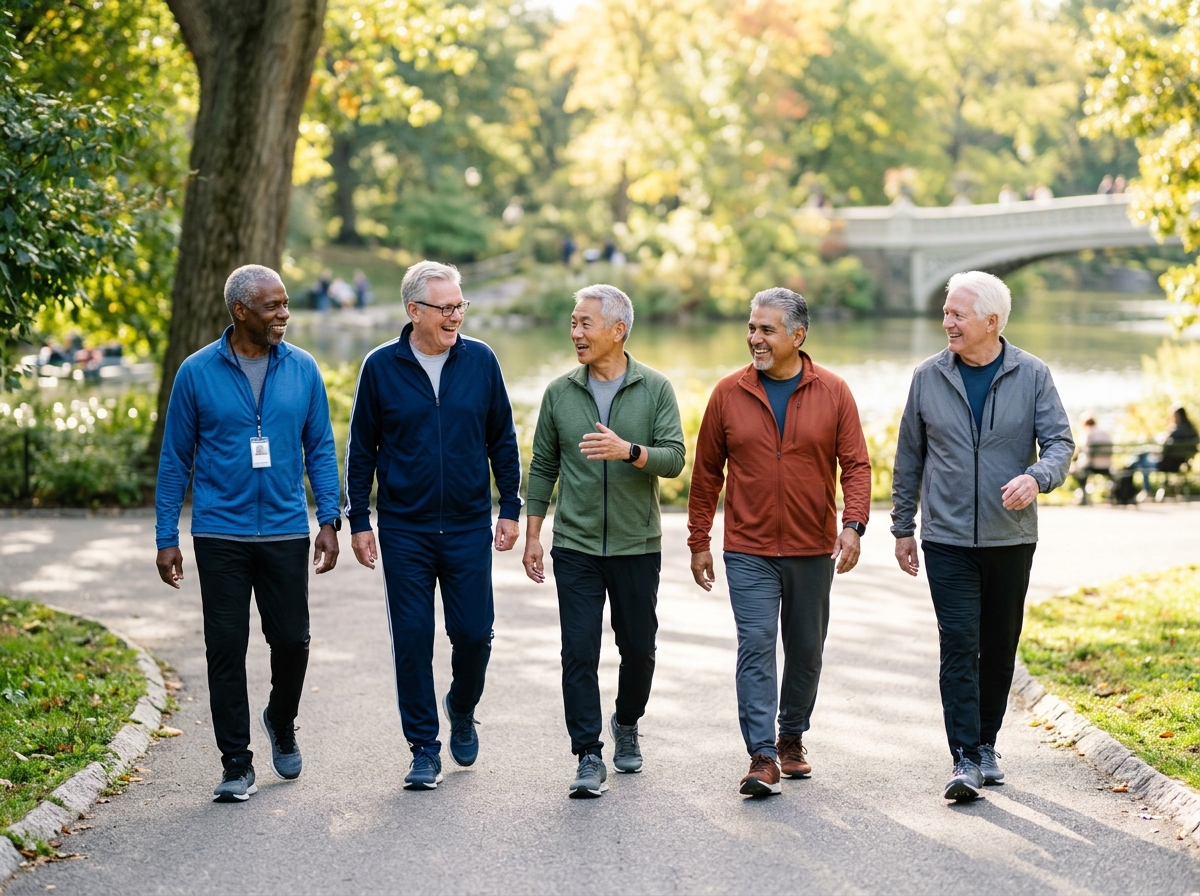
Build regular physical activity into your life. Walking, cycling, swimming, strength training, and other activities can help you build a more active lifestyle.
LEARN
Understand your risk and become an informed participant in your health. Learn about prostate cancer, nutrition, healthy behaviors, and family history.
LIVE
Turn knowledge into sustainable habits. Healthy living is not about making one perfect decision. It is about building habits that can become part of everyday life.
Talking With a Healthcare Professional
Consider talking with a healthcare professional about your prostate health if you have a family history, are concerned about your personal risk, have questions about prevention, are considering supplements, or have persistent urinary symptoms.
Questions to Ask Your Healthcare Professional
- chat_bubble About my risk: "What is my personal risk for prostate cancer?" or "Does my family history increase my risk?"
- chat_bubble About prevention: "What lifestyle changes would be beneficial for my overall health?" or "Should I be taking any vitamins or supplements?"
- chat_bubble About screening: "Based on my risk factors, should I discuss prostate cancer screening?"
A Message From TheBrightPath Foundation
Your health journey starts with knowledge. Prostate cancer can be frightening, but understanding your risk and learning what science actually tells us can help replace uncertainty with informed action.
format_quoteYou do not have to change everything at once.
Evidence & Trusted Sources
The information on this page has been informed by evidence and patient education resources from trusted medical organizations.
Prostate Cancer Prevention (PDQ®) – Patient Version
Source: National Cancer Institute (NCI)
Evidence-based patient resource explaining prostate cancer risk and protective factors and what isand is notknown about prevention.
Living as a Prostate Cancer Survivor
Source: American Cancer Society (ACS)
Covers follow-up care, PSA monitoring, survivorship planning, lifestyle considerations, treatment effects, and when to contact the care team.
Medical Disclaimer
TheBrightPath Foundation provides fact-based, evidence-informed educational information from credible organizations and research. This information is intended for educational purposes only and is not medical advice, diagnosis, or treatment. Information about prostate cancer and its prevention continues to evolve as researchers learn more. Always consult a qualified healthcare professional for advice about your individual health, risk factors, testing, medications, supplements, or treatment decisions.