
Build Your Foundation: The Science of Strength Training
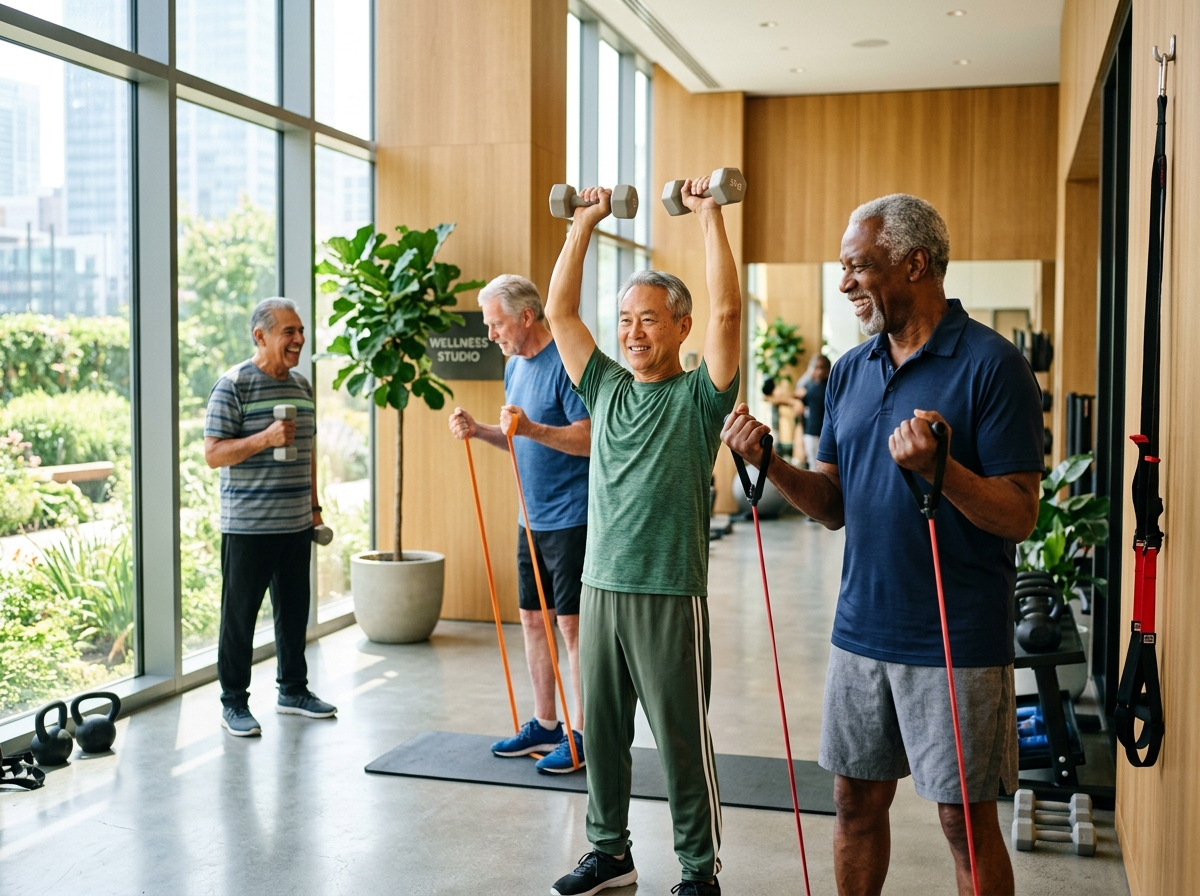
As we get older, maintaining our strength can help us stay independent, active, and healthy. Strength training, also called resistance training, is an important part of healthy aging. Research from organizations such as the American Academy of Orthopaedic Surgeons (AAOS) and the National Institute on Aging (NIA) shows that strength training can help support muscle strength, physical function, and overall quality of life.
There is a common misconception that strength training is reserved exclusively for athletes or bodybuilders. In reality, it is fundamentally about keeping your muscles, bones, and joints highly functional for daily living. The NIA categorizes muscle-strengthening as one of the essential pillars of a balanced exercise routine (alongside aerobic activity, flexibility, and balance). Whether you are using resistance bands, light dumbbells, or your own body weight, engaging in these deliberate exercises just two to three days a week can dramatically alter your health trajectory, protecting you against physical frailty and cognitive decline.
When we talk about active recovery, particularly for older men and those recovering from prostate cancer treatments, the focus shifts to restoring systemic health. Strength training acts as a profound biological signal to your body, triggering hormonal adaptations, increasing insulin sensitivity, and preserving the lean tissue that powers your metabolism.
The Physiology of Resistance: Core Health Benefits
The physiological benefits of resistance training go far beyond muscular endurance or aesthetic changes. By applying controlled mechanical stress to the body, you trigger a cascade of regenerative cellular processes that fortify your entire skeletal structure and metabolic systems.
Visual Infographic: Systemic Adaptations to Strength Training
(Neuromuscular Efficiency, Bone Remodeling, Hypertrophy, Fall Prevention)
1 Wolff's Law and Bone Mineral Density
According to the AAOS, bones are not static; they are living tissues that constantly remodel themselves. This process is governed by Wolff's Law, which states that bone adapts to the loads under which it is placed. When you lift weights or use resistance bands, your muscles pull against their attachments on the bone. This localized mechanical stress stimulates bone-forming cells called osteoblasts. Over months of consistent training, this results in significantly denser, stronger bones. This process is absolutely essential for slowing osteopenia and preventing osteoporosis, thereby protecting against severe, life-altering fractures of the hip and spine as you age.
2 Reversing Sarcopenia and Muscle Wasting
Sarcopeniathe natural, progressive loss of muscle mass, strength, and function that comes with agingcan begin as early as age 30, accelerating past age 60. Without intervention, adults can lose 3% to 8% of their muscle mass per decade. Strength training is the single most effective known intervention for slowing, halting, and even reversing sarcopenia. It specifically targets Type II (fast-twitch) muscle fibers, which are the first to atrophy with age but are crucial for catching yourself during a stumble and generating power.
3 Preserving Physical Independence (ADLs)
The NIA highlights that strength training directly translates to your ability to perform Activities of Daily Living (ADLs). The functional strength you build in the gym applies directly to carrying heavy groceries, getting up from a low chair without using your hands, opening jars, or climbing a flight of stairs effortlessly. This functional reserve is the difference between requiring assisted living and remaining fully self-sufficient and active in your community well into your 80s and 90s.
4 Joint Protection and Arthritis Management
Strong muscles act as highly efficient shock absorbers for your joints. By strengthening the musculature surrounding critical weight-bearing jointssuch as the quadriceps and hamstrings for the knees, or the glutes and core for the lower backyou reduce the structural load and friction placed on degrading cartilage. Clinical rheumatology studies consistently demonstrate that targeted strength training significantly reduces the pain and stiffness associated with osteoarthritis, often outperforming analgesic medications over the long term.
5 Enhances Metabolic Health and Heart Function
Muscle tissue is highly metabolically active compared to fat tissue. Increasing your lean muscle mass naturally elevates your Resting Metabolic Rate (RMR), helping you burn more calories around the clock. Furthermore, muscle acts as a "sink" for blood glucose. Resistance training improves insulin sensitivity and stimulates glucose uptake by the muscles, making it a critical, non-pharmacological tool in the management and prevention of type 2 diabetes. It also lowers resting blood pressure and improves lipid profiles.
Categorizing Resistance: Ways to Train
There are numerous ways to apply resistance to your muscles, and the best method is the one you enjoy and can perform safely and consistently. Here is how different modalities compare:
accessibility_new Bodyweight
Requires zero equipment. Exercises like wall push-ups, squats, and lunges use your own mass against gravity. Excellent for beginners and highly functional because they mimic real-world movements.
linear_scale Resistance Bands
Highly portable and joint-friendly. Bands provide "variable resistance," meaning the exercise gets harder at the peak of the movement, which is excellent for joint health and continuous muscle tension.
fitness_center Free Weights
Dumbbells and kettlebells force you to stabilize the weight yourself, which engages your core and smaller stabilizer muscles. They offer infinite scalability as you grow stronger.
precision_manufacturing Weight Machines
Found in most wellness centers, machines guide your movement path. They are incredibly safe for beginners or those recovering from injuries, as they isolate specific muscle groups without requiring balance.
The Role of Nutrition and Recovery
The actual workout is only the stimulus. The growth and strengthening occur entirely during the recovery phase. To maximize the benefits of strength training, you must provide your body with the necessary building blocks and time to repair.
- egg_alt Protein Synthesis: As we age, our bodies become less efficient at utilizing dietary protein (a phenomenon known as anabolic resistance). Older adults engaged in strength training need slightly more high-quality protein (like fish, lean poultry, beans, or Greek yogurt) spread evenly throughout the day to repair muscle tissue effectively.
- medication Calcium and Vitamin D: While strength training stimulates bone density, your body needs raw materials to build the bone. Ensure you have adequate Vitamin D levels (through safe sun exposure or supplements) and calcium in your diet to support osteoblast activity.
- bed Deep Sleep: Human Growth Hormone (HGH) and testosterone, both critical for tissue repair, are released predominantly during deep, slow-wave sleep. Consistently getting 7-8 hours of quality sleep is non-negotiable for recovery.
Getting Started: Safety Protocols
If you are new to strength training or returning after a long hiatus, safety must be your absolute priority. Here are the core guidelines recommended by orthopedic specialists:
- model_training Focus on Form over Weight: Always prioritize executing the movement with perfect posture over lifting heavier weights. Improper form shifts the load from the muscle to the joint, drastically increasing injury risk.
- airline_seat_recline_normal The 48-Hour Rule: Never train the exact same muscle group two days in a row. Always allow at least 48 hours of recovery time between intense resistance sessions targeting the same area.
- air Breathe Naturally: Never hold your breath while lifting (which can cause dangerous spikes in blood pressure). Exhale during the hardest part of the movement (exertion phase), and inhale as you return to the starting position.
- speed Control the Tempo: Perform exercises using slow, deliberate motions. Lifting a weight should take about two seconds, and lowering it (the eccentric phase, where much of the muscle breakdown occurs) should take three to four seconds to maximize muscle engagement safely.
Watch: Core Functional Movements
Master the basics: proper bodyweight squats, wall push-ups, and band pulls.